
Tiny Hunters Short Answer
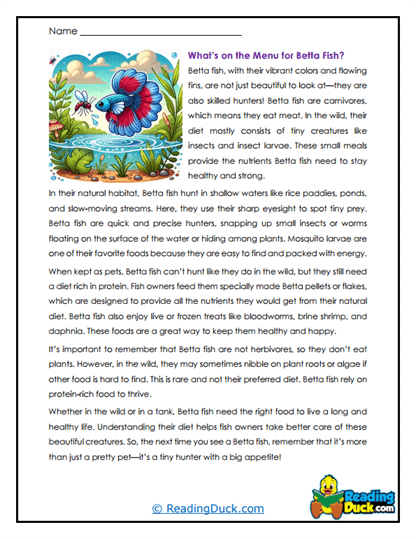
Those beautiful flowing fins can make betta fish look delicate, but this passage reveals that they are actually skilled little predators. Students learn that wild bettas are carnivores whose diets include insects, insect larvae, and other small aquatic animals. The reading explains how quick movements and sharp eyesight help them locate and capture prey in shallow water, while also comparing their natural foods with pellets, bloodworms, brine shrimp, and other foods commonly provided in captivity. Readers come away understanding that an appropriate protein-rich diet is closely tied to a betta’s health and survival.
This passage gives students useful practice connecting diet, body features, and behavior. They work with supporting details while learning why an animal eats certain foods instead of simply memorizing a list of meals. Terms connected to carnivores, larvae, prey, nutrition, and aquatic environments build science vocabulary in meaningful context. It also encourages cause-and-effect thinking as students connect proper nutrition with the health and well-being of the fish.