
Twilight Patrols Open Response
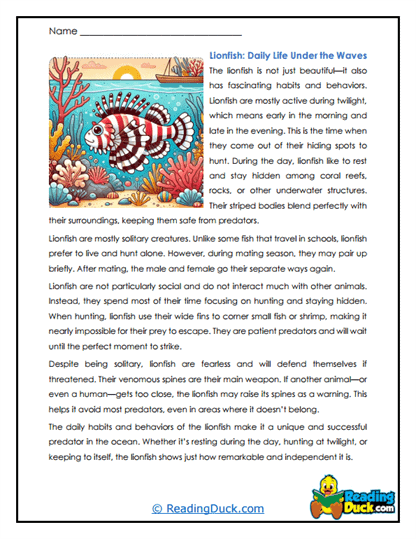
Lionfish have daily habits that are closely tied to when and where they hunt. This passage explains that they are especially active around dawn and dusk, when lower light levels make it easier to surprise prey. Readers learn how lionfish often rest among coral, rocks, or other hidden places during the day and then move out to hunt when conditions are right. The passage also highlights their solitary nature and how they use their venomous spines as a warning when they feel threatened.
Reading about daily behavior helps students practice sequencing, recognizing patterns, and connecting activity with survival. Vocabulary related to twilight, solitary behavior, territory, predators, and hunting develops naturally through the text. This worksheet also gives students useful practice explaining why certain behaviors happen at specific times of day.