
Leaf Eaters Multiple Choices
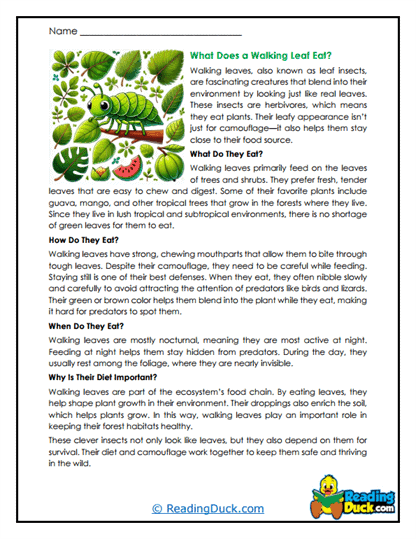
One of the things that makes walking leaves so fascinating is that their appearance perfectly matches their lifestyle. This passage explores what walking leaves eat and how they find food while remaining hidden from predators. Students learn that walking leaves are herbivores that feed mainly on leaves, especially tender new growth found on shrubs and trees. The text explains how their camouflage allows them to eat safely without drawing attention to themselves. Readers also discover that walking leaves are often most active at night, when they can feed while many predators are less active. The passage highlights how their diet, behavior, and appearance work together to help them survive.
Reading passages about animal diets helps students understand the connection between structure, behavior, and survival. Children practice identifying important details and recognizing cause-and-effect relationships within informational text. Vocabulary such as herbivore, foliage, and camouflage strengthens both science knowledge and reading comprehension. These discussions also encourage students to think about how animals meet their basic needs in different environments, helping them become more thoughtful readers and learners.