Egg to Leaf
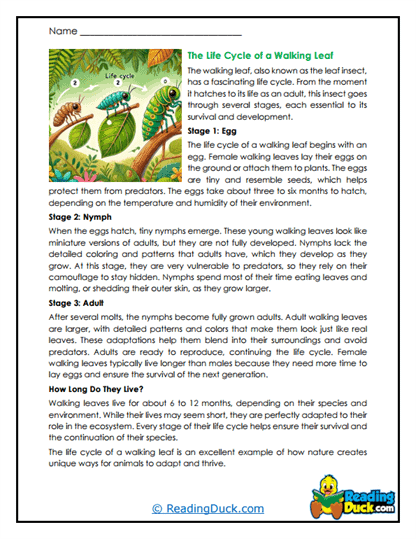
This passage helps students understand the life cycle of the walking leaf and the incredible changes it experiences as it grows. Readers learn that the journey begins with tiny eggs that closely resemble seeds, helping them remain hidden from predators. The text explains how young nymphs hatch looking like miniature versions of adults and gradually develop their leaf-like appearance through a series of molts. Students discover that each stage of growth brings new adaptations that improve the insect’s ability to blend into its surroundings. By the end of the passage, children see how every phase of the life cycle contributes to the walking leaf’s survival and success.
Passages about life cycles are especially valuable because they help students practice sequencing and understanding processes. Children learn to follow stages in order while expanding their scientific vocabulary with words such as nymph, molt, development, and adaptation. Informational texts also encourage students to identify key details and explain how living things change over time. These reading experiences strengthen comprehension, organization, and critical-thinking skills while building confidence in reading nonfiction science texts.
Questions:
Answer Keys: