
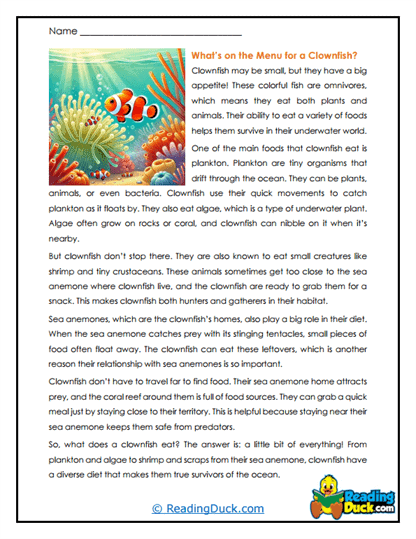
Reef Foragers
Clownfish have a surprisingly varied diet for such small fish, and this passage gives students a closer look at what they eat in the wild. Readers learn that clownfish are omnivores that feed on plankton, algae, shrimp, tiny crustaceans, and bits of food left behind by their sea anemone homes. The passage also explains how clownfish use quick movements to catch drifting food while staying close enough to the anemone to remain protected from predators. Students begin to see how feeding habits, habitat, and survival are all connected.
This worksheet helps students practice identifying supporting details and understanding how an animal’s diet fits into its environment. Vocabulary related to omnivores, plankton, crustaceans, algae, and food sources develops naturally through context. Readers also work on cause-and-effect thinking as they connect the clownfish’s feeding behavior with its close relationship to the sea anemone. It’s a strong passage for helping students understand that where an animal lives often shapes what it eats and how it finds food.
Questions:
Answer Keys: